




 WhatsApp
 Contact Supplier
Vitamin C (ascorbic acid) is white or slightly yellow crystalline particles or crystalline powder, odorless.
It complies with the National Food Safety Standard of the People's Republic of China (GB14754-2010) for Food Additive Vitamin C (Ascorbic Acid).
|
Item |
index |
|
Content (to dry basis),w% |
≥99 |
|
Specific optical rotation (to dry basis)αm(20 ℃,D/[(°)·m2·kg-1] |
+20.5°~+21.5° |
|
Ignition residue,w% |
≤0.1 |
|
Arsenic(As)/(mg/kg) |
≤3 |
|
Heavy metals (calculated as Pb)/(mg/kg) |
≤10 |
|
Lead(Pb)/(mg/kg) |
≤2 |
|
Iron(Fe)/(mg/kg) |
≤2 |
|
Copper(Cu)/(mg/kg) |
≤5 |
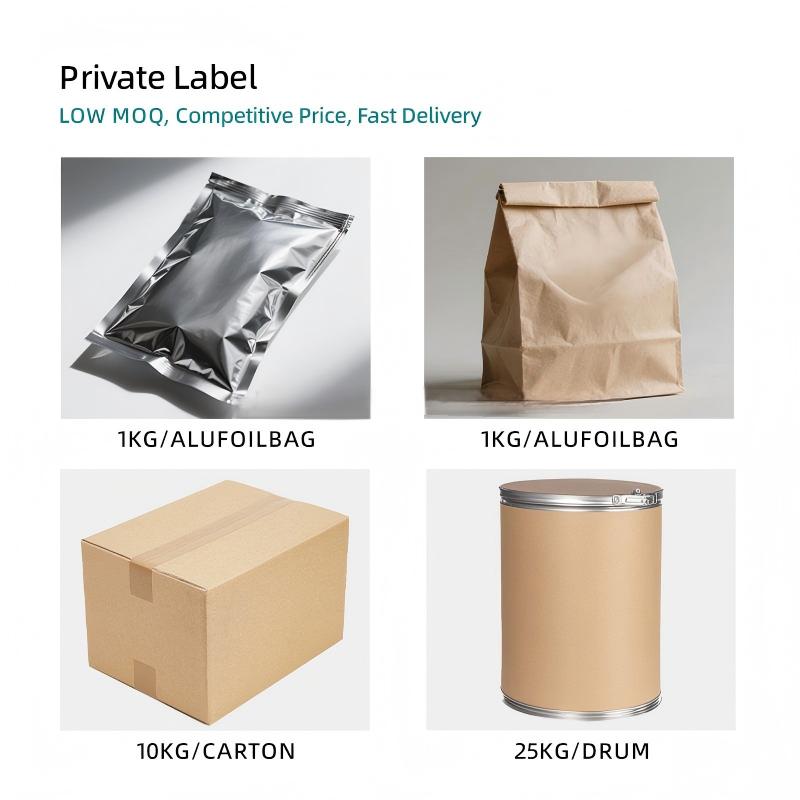
Inner packing: double-layer polyethylene plastic bag for food; outer packing: cardboard box (50 x 30 x 20 cm); net weight 25 kg, gross weight 26.5 kg. Special packaging is available according to customer requirements.
Storage:
sealed and stored in a ventilated, dry and cool warehouse, and not be mixed with toxic substances. The requirements for its transportation are the same as those for storage.
Applications:
Vitamin C (ascorbic acid) can treat scurvy and various acute and chronic infectious diseases in the pharmaceutical industry, suitable for people deficient in vitamin C; while in the food industry, it can be used as a nutritional intensifier to supplement the vitamin C lost in food processing, a good antioxidant for food preservation widely applied in dried meat products, fermented flour products, beer, tea beverages, fruit juices, canned fruit, canned meat, etc., also commonly used in cosmetics, feed additives and other industrial fields.